[I wonder if this is getting too technical for this blog.]
It seems very hard to evaluate the benefits of pixel density and photo site size. ("Photo site": each tiny light-recieving dot inside the camera. The larger it is, the more sensitive it is.)
One thing I noted in a professional review in a British mag, comparing the Nikon D3 with the Canon 1Ds III, was that it gave the overall image quality of the D3 to be at least equal to that of the 1Ds, despite the D3 nigh only half the resolution. (And of course you have smaller files and a more sensitive sensor.) The lenses could have something to do with it though.
My Canon Ixus 960, though, makes much sharper pictures than my old Fuji F10 (which I thought was wonderful), and doesn't have more noise despite having twice the megapixels. Of course, then the Canon is three years newer.
Given that there are so many factors, I wonder if we'll ever have a clear answer.
Saturday, July 19, 2008


victimization
"We do not and cannot accept the principle that incompetence justifies dismissal, that is victimization."
-- Peter Sellers as union man in I'm All Right, Jack
-- Peter Sellers as union man in I'm All Right, Jack
Old pics
[Shorpy.com]
Look at the first picture, Washington, D.C., circa 1920. Eddi In a Abbott-Detroit roadster. Nice car. Nice picture. And what a wide-angle lens. I'd guess a 24mm equivalent from the perspective. He even got the front end of the camera bottom plate in the picture!

It's interesting to me how much I like pictures like these. For desktop use for example. I don't really know why. Maybe the nice grey tones. Maybe the detail. Maybe the abstraction of an age gone by. Maybe the relaxed straightforward but careful compositions. Maybe all of the above.
But then I don't like all of them equally. So maybe it's also just that they are good pictures, some of them.

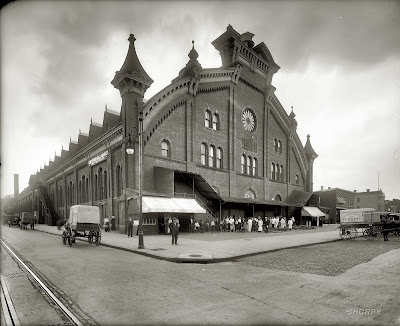

Look at the first picture, Washington, D.C., circa 1920. Eddi In a Abbott-Detroit roadster. Nice car. Nice picture. And what a wide-angle lens. I'd guess a 24mm equivalent from the perspective. He even got the front end of the camera bottom plate in the picture!

It's interesting to me how much I like pictures like these. For desktop use for example. I don't really know why. Maybe the nice grey tones. Maybe the detail. Maybe the abstraction of an age gone by. Maybe the relaxed straightforward but careful compositions. Maybe all of the above.
But then I don't like all of them equally. So maybe it's also just that they are good pictures, some of them.


Family planning
Now she has to listen to me.

I'm reminded of the male band in Josy And The Pussycats (with Seth Green singing), one of their hits, sung with a straight face, was "Back Door Lover".

I'm reminded of the male band in Josy And The Pussycats (with Seth Green singing), one of their hits, sung with a straight face, was "Back Door Lover".
To blur or not to blur
"To blur or not to blur", post by Lloyd.
"A friend of mine detests blurry images. Some of my favorites he dismisses as “not sharp.” We all have strong and different reactions to image rendition, and that’s good!"
Yes indeed. Blur can be good as a contrast to sharpness.
And not only that, but as Mike Johnston sometimes says about various things: "it's only a property". As opposed to a measure of quality, I guess he means. He also pointed out to me how sharpness is very subjective. A picture of something in strong light can look a lot sharper than something in dull light, even if it aint.
If you shoot for Architectural Digest, you don't want blur, and you don't want converging verticals. But in amateur pictures and art pictures, anything goes. It's just what you like.
Sharpness, even in the focal plane, while usually a good thing, is not strictly necessary. Once on a holiday, I shot with disposable cameras, pardon me, recyclable cameras. I came home with a couple of pictures I really liked, despite the fact that even at 8x10 they could not be called sharp by any measure. And it may even have helped them, since their main quality was soft tones, and these may have been helped into prominence by the absence of sharp detail.
One should try not to get too hung up on any one property. Once back in my old photo club days, I was reviewing somebody else's photo of a girl on a bicycle. I really liked it. Two of the members heckled me because it was not sharp. Sure, it was not the sharpest picture I'd seen, but for me it did not ruin it, it was just a lovely picture.
Background blur, of course, can be just pleasant. Here are some pictures I took with the Canon 5D and the excellent Canon lens 35mm F:1.4. It has some vignetting if used at full aperture, but I kind of like that.


Update: by a funny coinkidink, Mike just wrote something relevant in the first of his new columns:
"...once I've decided a lens is okay, I just photograph with it. If some slight technical flaw shows up in a picture, I don't obsess about it.
And when you think about it, isn't that really the mark of maturity in a photographer? He or she does the necessary research, acquires the equipment needed to do the work, but then gets on with the work. And forgets about the equipment."
"A friend of mine detests blurry images. Some of my favorites he dismisses as “not sharp.” We all have strong and different reactions to image rendition, and that’s good!"
Yes indeed. Blur can be good as a contrast to sharpness.
And not only that, but as Mike Johnston sometimes says about various things: "it's only a property". As opposed to a measure of quality, I guess he means. He also pointed out to me how sharpness is very subjective. A picture of something in strong light can look a lot sharper than something in dull light, even if it aint.
If you shoot for Architectural Digest, you don't want blur, and you don't want converging verticals. But in amateur pictures and art pictures, anything goes. It's just what you like.
Sharpness, even in the focal plane, while usually a good thing, is not strictly necessary. Once on a holiday, I shot with disposable cameras, pardon me, recyclable cameras. I came home with a couple of pictures I really liked, despite the fact that even at 8x10 they could not be called sharp by any measure. And it may even have helped them, since their main quality was soft tones, and these may have been helped into prominence by the absence of sharp detail.
One should try not to get too hung up on any one property. Once back in my old photo club days, I was reviewing somebody else's photo of a girl on a bicycle. I really liked it. Two of the members heckled me because it was not sharp. Sure, it was not the sharpest picture I'd seen, but for me it did not ruin it, it was just a lovely picture.
Background blur, of course, can be just pleasant. Here are some pictures I took with the Canon 5D and the excellent Canon lens 35mm F:1.4. It has some vignetting if used at full aperture, but I kind of like that.


Update: by a funny coinkidink, Mike just wrote something relevant in the first of his new columns:
"...once I've decided a lens is okay, I just photograph with it. If some slight technical flaw shows up in a picture, I don't obsess about it.
And when you think about it, isn't that really the mark of maturity in a photographer? He or she does the necessary research, acquires the equipment needed to do the work, but then gets on with the work. And forgets about the equipment."
Alex D80 pictures
Our frequent commentator Alex has stepped into the age of the digital SLR age with a Nikon D80. Congratulations, dudeski, I'm sure you'll love it like TTL says he does.
I like Alex's pictures. He looks at the picture instead of the subject.


I like Alex's pictures. He looks at the picture instead of the subject.


Bebe Neuwirth
Another one in the looooong line of beautiful and talented actresses who are tragically and stupidly overlooked by Hollywood producers and casting agents. What is wrong with these people? As Lillith on Frasier and Cheers and in the small parts she's had in movies, she's proven that she has ooomph, charisma, talent, a singular personality, and smoking hot looks.
In fact she is so overlooked that I couldn't even find a decent fan site or any good pictures of her! Geez.
It seems these days she is doing off-0ff-Broadway (Norway) cabaret.


In fact she is so overlooked that I couldn't even find a decent fan site or any good pictures of her! Geez.
It seems these days she is doing off-0ff-Broadway (Norway) cabaret.


Friday, July 18, 2008
Price and reliability
It used to be that if you bought a premium brand, you also bought reliability. This seems to be less true in the digital age. Probably because unlike an analogue product, a digital one can't be built by a mere dozen highly trained people, but depends upon several very big companies to be built at all.
Examples of high-end products with problems are Hasselblad and Leica, both of which used to be the best of the best, and are still amongst the most expensive at least.
Examples of high-end products with problems are Hasselblad and Leica, both of which used to be the best of the best, and are still amongst the most expensive at least.
DigLloyd
I enjoy Lloyd's blog, DigLloyd, he is easy to read, and unusually knowledgeable about photography both technically and aesthetically. If that wasn't enough, today he made a very pleasing post about Domai. You know, my other site, the one which pays for this one. :)
Sharpness
Article on what is photo sharpness really.
It's fleshed out in the Comments section by the author and others.
Apropos sharpness, I've recently begun using continous shooting mode and taking three pictures when I am operating on the lower edge of what I can hand-hold (either with a stabilized camera or not). It really helps me get at least one sharp picture. Usually the first one is the blurriest, surely because that's the one where I had to move my finger to press the button. And before now, that blurry one would be the only picture I'd get.
(Of course here again digital is a blessing because you don't waste any film/processing cost doing this.)
It's fleshed out in the Comments section by the author and others.
Apropos sharpness, I've recently begun using continous shooting mode and taking three pictures when I am operating on the lower edge of what I can hand-hold (either with a stabilized camera or not). It really helps me get at least one sharp picture. Usually the first one is the blurriest, surely because that's the one where I had to move my finger to press the button. And before now, that blurry one would be the only picture I'd get.
(Of course here again digital is a blessing because you don't waste any film/processing cost doing this.)
Nikon D80 revisited
There's been some added discussion and experiences on the two-year-old post about the Nikon D80. I still think it's an excellent camera. In fact even the smaller D60 is quite camera enough for me. Only caveat is that probably a replacement for the D80 is due any day, and that one may have better high-ISO performance (less grain in the pictures in low light), at least if Nikon incorporates the advancements evident in the pro cameras recently.
Handling covertly hostile people
Some people want to attack you, but not to be recognized for being hostile. This often happens with journalists, I've noticed.
What you can do is totally ignore their hostility and only respond to what they are actually saying, literally. This renders them powerless if they are not willing to communicate directly.
Also, they like to imply things that might upset you. What you can do is you is either ignore it or call them out on it. For example I read an interview with an old rock musician in Denmark. Many Danes have the idea that it's somehow odious to want to make money, and this journalist personfied that belief. The whole interview was questions based on the assumption that it would be a bad thing if the musician was playing their old hits because it would give him a better income.
The musician handled it pretty well, without getting hostile himself. But he did seem to buy into the unspoken premise. What he could have done was making the journalist state his premise explicitly, like asking: "so what you're saying is that if I make any money on playing the music we made back then, this would be immoral of me?" Or maybe even "so you're saying that making money is a bad thing?" This forces the other guy to either back down or reveal his true face.
I have to admit that this journalist had the game down: he asks the drummer who has had "the least success" since the old band broke up thirty years ago, him or the guitarist. (Those are the two who have not had any hits since.) This is tricky: it's a seemingly factual question, but only designed to piss off the interviewee and make him feel small. It's so covert that it is easy to miss the intention and yet let it trigger anger. The answer the drummer gave was "I don't know, but I think I've been playing more". Which is a good answer that neither invalidates himself or his friend. Another way could have been to laugh loudly and say: "haha, so what you want to do is to make me say either that I'm a failure, or Franz is a failure? Good one mate, very funny."
There was a TV interview many years ago of Leonard Cohen. He had stipulated that he woudn't answer any questions about how to interpret his lyrics, and yet the journalist kept asking questions about just that. What Leonard did was get the journalist to play the thumb game with him, what's it called, where you lock fingers and try to catch the other guy's thumb with your own. This not only totally disarmed the journalist, but also in a subtle way the mock battle of thumbs symbolized what the journalist was trying to do to him. Very nice.
Of course one might say, what if you do get angry?
1: Keep your cool and continue to be friendly. This impresses any listeners and disarms the would-be-opponent.
2: Later, work on letting your anger go. This is a long process, but it's very good for your health in the long run to keep at it. A lot of anger is very bad for your health when you get older.
----
Pascal commented:
In Japan, they have special "shops" where people can come and break lots of porcelain (cheap) items to vent off. Most customers are stressed-up employees. For a small added fee, they can even have the face of their boss printed on the plates, vases, etc. It's not only very popular, but completely accepted by the general public. Considered perfectly normal. :-?
I've gotten very, very good over the years at this "virtual thumb game" of conversation. Thanks to the national fondness of covert verbal aggression.
First and essential step is to immediately spot it, or expect that it may be played on you. I've gotten so good, that I can manage to give "the other" plenty opportunities to save face and gently back off unembarrassed.
It's true, and I forgot to add it to the article: spotting when it happens is half the game.
What a very Japanese thing it is to consider it normal to be eaten up with unexpressable anger.
What you can do is totally ignore their hostility and only respond to what they are actually saying, literally. This renders them powerless if they are not willing to communicate directly.
Also, they like to imply things that might upset you. What you can do is you is either ignore it or call them out on it. For example I read an interview with an old rock musician in Denmark. Many Danes have the idea that it's somehow odious to want to make money, and this journalist personfied that belief. The whole interview was questions based on the assumption that it would be a bad thing if the musician was playing their old hits because it would give him a better income.
The musician handled it pretty well, without getting hostile himself. But he did seem to buy into the unspoken premise. What he could have done was making the journalist state his premise explicitly, like asking: "so what you're saying is that if I make any money on playing the music we made back then, this would be immoral of me?" Or maybe even "so you're saying that making money is a bad thing?" This forces the other guy to either back down or reveal his true face.
I have to admit that this journalist had the game down: he asks the drummer who has had "the least success" since the old band broke up thirty years ago, him or the guitarist. (Those are the two who have not had any hits since.) This is tricky: it's a seemingly factual question, but only designed to piss off the interviewee and make him feel small. It's so covert that it is easy to miss the intention and yet let it trigger anger. The answer the drummer gave was "I don't know, but I think I've been playing more". Which is a good answer that neither invalidates himself or his friend. Another way could have been to laugh loudly and say: "haha, so what you want to do is to make me say either that I'm a failure, or Franz is a failure? Good one mate, very funny."
There was a TV interview many years ago of Leonard Cohen. He had stipulated that he woudn't answer any questions about how to interpret his lyrics, and yet the journalist kept asking questions about just that. What Leonard did was get the journalist to play the thumb game with him, what's it called, where you lock fingers and try to catch the other guy's thumb with your own. This not only totally disarmed the journalist, but also in a subtle way the mock battle of thumbs symbolized what the journalist was trying to do to him. Very nice.
Of course one might say, what if you do get angry?
1: Keep your cool and continue to be friendly. This impresses any listeners and disarms the would-be-opponent.
2: Later, work on letting your anger go. This is a long process, but it's very good for your health in the long run to keep at it. A lot of anger is very bad for your health when you get older.
----
Pascal commented:
In Japan, they have special "shops" where people can come and break lots of porcelain (cheap) items to vent off. Most customers are stressed-up employees. For a small added fee, they can even have the face of their boss printed on the plates, vases, etc. It's not only very popular, but completely accepted by the general public. Considered perfectly normal. :-?
I've gotten very, very good over the years at this "virtual thumb game" of conversation. Thanks to the national fondness of covert verbal aggression.
First and essential step is to immediately spot it, or expect that it may be played on you. I've gotten so good, that I can manage to give "the other" plenty opportunities to save face and gently back off unembarrassed.
It's true, and I forgot to add it to the article: spotting when it happens is half the game.
What a very Japanese thing it is to consider it normal to be eaten up with unexpressable anger.
Are families stressing?
Yesterday I ran into my upstairs neighbor. He read from my tee-shirt, which says: "Six foot four, Handsome, And money too."
I said I thought it might be an idea to andvertize a little. He said maybe he should have one made saying "Five foot eight and skint" (Brit for broke).
I said "at least you're fit". (He's a good looking and fit black guy.) And I added: "and we're both looking young." We are both mid-forties.
He agreed. He said: "I have friends at thirty-eight who look fifty." I said "I know!"
He said: "of course they are married and have children. That can't be easy." I said "Yeah, you and I, we are living the easy life here." And then we laughed and we laughed. Oh, how we laughed!
But seriously, I wonder if having a family to support does wear down people much faster? I do know that being able to nap in the afternoon without any tykes tearing the place down is a good thing.
Of course family people often say that children is a big blessing. Good for them.
By the way, I recently read an interesting thought: that the reason caucasian birth rates are way down in Europe is because Christianity has lost its mainstream power. And that it takes a major religion to make populations "multiply and be fruitful". I don't really understand how that works, in both senses: I don't understand how anybody can let a religion rule their life to that degree, and I also don't understand exactly what it is that all the major religions do exactly to induce fruitiness (apart from banning condoms in the case of Catholicism).
I said I thought it might be an idea to andvertize a little. He said maybe he should have one made saying "Five foot eight and skint" (Brit for broke).
I said "at least you're fit". (He's a good looking and fit black guy.) And I added: "and we're both looking young." We are both mid-forties.
He agreed. He said: "I have friends at thirty-eight who look fifty." I said "I know!"
He said: "of course they are married and have children. That can't be easy." I said "Yeah, you and I, we are living the easy life here." And then we laughed and we laughed. Oh, how we laughed!
But seriously, I wonder if having a family to support does wear down people much faster? I do know that being able to nap in the afternoon without any tykes tearing the place down is a good thing.
Of course family people often say that children is a big blessing. Good for them.
By the way, I recently read an interesting thought: that the reason caucasian birth rates are way down in Europe is because Christianity has lost its mainstream power. And that it takes a major religion to make populations "multiply and be fruitful". I don't really understand how that works, in both senses: I don't understand how anybody can let a religion rule their life to that degree, and I also don't understand exactly what it is that all the major religions do exactly to induce fruitiness (apart from banning condoms in the case of Catholicism).
Thursday, July 17, 2008
Inviting Joy QT VR movie
I've had a QuickTime VR movie made of the Domai Sculpture. Very nice, I think.
Black bread
OK, I admit it, when I'm in a good mood, I'm easily amused. In this case by the similarity of the mayo pattern on the two slices.
The English, sadly, have no concept of dark bread. What they call "brown bread" is about as dark as pine wood. I had to find a german supermarket to find real black rye bread. It tastes great with anything, and is much more nutritious.

The English, sadly, have no concept of dark bread. What they call "brown bread" is about as dark as pine wood. I had to find a german supermarket to find real black rye bread. It tastes great with anything, and is much more nutritious.

The Creature from Jekyll Island
L-loyd has a couple of interesting book recommendations in the libertarian style.
He also have some pithy comments on Nikon D3 versus Canon 1Ds III.
He also have some pithy comments on Nikon D3 versus Canon 1Ds III.
Being beautiful
It must be difficult to be a beautiful girl.
One of the most central problems of life is trying to be a mind instead of an object. And beautiful people, particularly women, are rewarded continually for being an object. It must be very hard to step above that.
One of the most central problems of life is trying to be a mind instead of an object. And beautiful people, particularly women, are rewarded continually for being an object. It must be very hard to step above that.
Wednesday, July 16, 2008
Seeing
"Seeing is believing," said Granny [Weatherwax] calmly. "Of course the trouble is that believing is also seeing."
- Terry Pratchett, Maskerade
- Terry Pratchett, Maskerade
Eye strain
Sometimes in the evening after using the computer a lot, very suddenly by eyes will burn and itch and water. I quickly have go close my eyes for a while, preferably in a darkened room. It does not happen often, but it's irritating when it does. So I searched for the problem, and found this.
What I find immediately applicable for myself is
1) turn down the screen brightness a bit.
2) blink a lot more than I have tended to. I tend to stare when I am concentrating.
Probably it's also a good idea to not use the computer more than an hour straight.
These days I like to get any book I can on audio. It's great to be able to Read lying down with closed eyes in dull light or darkness. It's also good when I'm about to go to sleep. I can stop reading just by clicking a button, I don't have to put down a book, take off my glasses, remove a reading pillow, turn off the light...
What I find immediately applicable for myself is
1) turn down the screen brightness a bit.
2) blink a lot more than I have tended to. I tend to stare when I am concentrating.
Probably it's also a good idea to not use the computer more than an hour straight.
These days I like to get any book I can on audio. It's great to be able to Read lying down with closed eyes in dull light or darkness. It's also good when I'm about to go to sleep. I can stop reading just by clicking a button, I don't have to put down a book, take off my glasses, remove a reading pillow, turn off the light...
An enigma
A friend said to me:
"Why are you always talking out of your ass? You're a mystery to me."
I said:
"I'm a mystery, inside a riddle, wrapped in an enema."
"Why are you always talking out of your ass? You're a mystery to me."
I said:
"I'm a mystery, inside a riddle, wrapped in an enema."
Strategy
However beautiful the strategy, you should occasionally look at the results.
-- Sir Winston Churchill
-- Sir Winston Churchill
On Top
Pascal sent.
- Okay, we got naked, I'm on top of you, now how long before it starts feeling good?
- I don't know, but now I know why Mom so often has a headache...

- Okay, we got naked, I'm on top of you, now how long before it starts feeling good?
- I don't know, but now I know why Mom so often has a headache...

Tuesday, July 15, 2008

The Empire Strikes Back
Remember Psystar Macintosh clones? (I'd forgotten.)
Well, now Apple, as one might have expected, strikes back at them.
I love Apple, but it would be interesting if Psystar could win this one, cheap clones would open up choice for Macintosh users, and put some pressure on Apple's prices.
Of course on the other hand they say Apple makes its profit on hardware, not software, and they need that profit to keep their interest in working on the platform.
Well, now Apple, as one might have expected, strikes back at them.
I love Apple, but it would be interesting if Psystar could win this one, cheap clones would open up choice for Macintosh users, and put some pressure on Apple's prices.
Of course on the other hand they say Apple makes its profit on hardware, not software, and they need that profit to keep their interest in working on the platform.
Antoni Gaudi
So how come Gaudi was practically the only architect ever to have the balls to use colors and curves?
I'm not saying everything should look like his work, but it does demonstrate the dominating paucity of imagination.

Bert said:
There certainly isn't a single answer to that, but he somehow had to have a talent for sales, too. Architects build for clients, after all, and I suspect that audacity is much more rare with the clients than with the creators.
The Spaniards deserve quite a bit of credit for embracing his genius. And when you look at what's happening in architecture today, most if not all of the boldest creations are being realized in Russia or the East. The Western world seems to be far too conservative still.
Ah, yes, good point. I should have thought of that. I had a friend who made furniture, some wonderful designs like a coffee table with a big zipper in inlaid wood. Everybody loved them, but nobody bought them. (I was one of the first.)
solenostomus points out:
Well, he certainly wasn't the only one - look up Friedensreich Hundertwasser - it doesn't get much more colourful than his buildings and they are still looking for that single right angle that's rumoured to be hidden somewhere in his construction plans.


Hey, not bad.
I'm not saying everything should look like his work, but it does demonstrate the dominating paucity of imagination.

Bert said:
There certainly isn't a single answer to that, but he somehow had to have a talent for sales, too. Architects build for clients, after all, and I suspect that audacity is much more rare with the clients than with the creators.
The Spaniards deserve quite a bit of credit for embracing his genius. And when you look at what's happening in architecture today, most if not all of the boldest creations are being realized in Russia or the East. The Western world seems to be far too conservative still.
Ah, yes, good point. I should have thought of that. I had a friend who made furniture, some wonderful designs like a coffee table with a big zipper in inlaid wood. Everybody loved them, but nobody bought them. (I was one of the first.)
solenostomus points out:
Well, he certainly wasn't the only one - look up Friedensreich Hundertwasser - it doesn't get much more colourful than his buildings and they are still looking for that single right angle that's rumoured to be hidden somewhere in his construction plans.


Hey, not bad.
Monday, July 14, 2008
ED's Furry F***ing Guide To Metal
Warning: don't play if you don't like the F-word!
This is funny, and very professionally made.
Apparently it's a band named Stinkhole. I wonder if they are also puppets when they are on the road.
Ahhh, here we go, it's a brand new TV show, Fur TV.
Stinkhole rocks (audio only). Really f***ing good music, I wish I had it in higher audio quality. ... Aha, I can record from their MySpace page, that's better, and in stereo.
Update:
Chanelle Hayes - Sex Tape. Maybe it's better that Jim Henson is no longer with us.
This is funny, and very professionally made.
Apparently it's a band named Stinkhole. I wonder if they are also puppets when they are on the road.
Ahhh, here we go, it's a brand new TV show, Fur TV.
Stinkhole rocks (audio only). Really f***ing good music, I wish I had it in higher audio quality. ... Aha, I can record from their MySpace page, that's better, and in stereo.
Update:
Chanelle Hayes - Sex Tape. Maybe it's better that Jim Henson is no longer with us.
Dr. Horrible
[Thanks to Bert for this and the previous post.]
Joss Whedon's new adventure.
Notice what the green intro screen says.
Master plan.
Joss Whedon's new adventure.
Notice what the green intro screen says.
Master plan.
Western Spaghetti
I like that videos on snotr (though not when embedded) are scalable. YouTube could learn something.
Sunday, July 13, 2008
Phase One 60MP
It's like the football matches of my childhood. Only back then the Swedes always crushed the Danes. Times have changed now, and not only in football.
Swedish Hasselblad (with a Danish CEO now, hehe) recently announced a 50 megapixel camera back, now Danish Phase One has announced a 60 megapixel one, which even is the first "full frame" 645 back.
Swedish Hasselblad (with a Danish CEO now, hehe) recently announced a 50 megapixel camera back, now Danish Phase One has announced a 60 megapixel one, which even is the first "full frame" 645 back.
Reva G-Wiz
I was considering getting a G-Wiz, but it's not getting so hot reviews, at least not when it's considered as a car.
The Best Of Times...
Mike Johnston writes:
"I have a secret belief that everybody's best stereo is the first good one they buy, and everybody's favorite camera is the one they used the most when they were the youngest."
I agree. I have noticed that film makers tend to make films about the things they loved when they were teenagers. The things they experienced and the TV shows they loved...
I think what we really hanker for is mental and spiritual expansion, and the times when these happened to us the most. What I really loved was the freedom and the rampant creativity of the summer of 1977 when I'd gotten my first serious camera, more than the camera itself (a Konica TC).
We love what things represent, also. We love the feel and smell of a book because of the stories we have read in books in the past, not because paper smells lovely. We love our hot sports car because it represents our virility and superiority over lesser men. Me, I love a "beautiful" camera, because it represents the thrill of making a good picture and the praise and prizes I've gotten in the past, and also the pictures I imagine and hope to make in the future.
"I have a secret belief that everybody's best stereo is the first good one they buy, and everybody's favorite camera is the one they used the most when they were the youngest."
I agree. I have noticed that film makers tend to make films about the things they loved when they were teenagers. The things they experienced and the TV shows they loved...
I think what we really hanker for is mental and spiritual expansion, and the times when these happened to us the most. What I really loved was the freedom and the rampant creativity of the summer of 1977 when I'd gotten my first serious camera, more than the camera itself (a Konica TC).
We love what things represent, also. We love the feel and smell of a book because of the stories we have read in books in the past, not because paper smells lovely. We love our hot sports car because it represents our virility and superiority over lesser men. Me, I love a "beautiful" camera, because it represents the thrill of making a good picture and the praise and prizes I've gotten in the past, and also the pictures I imagine and hope to make in the future.
Paranoia has taken over child protection
"Paranoia has taken over child protection", article by India Knight
"Why have we become such a horribly dirty-minded society when it comes to children? Like the salacious weirdos who pervert religion and use it as a tool to see filth and evil where there is none, we have come to view childhood not as a joyful and innocent state, but as one that constantly needs protecting from depraved attacks and abuses."
Update: I recommend reading the comments on this one.
"Why have we become such a horribly dirty-minded society when it comes to children? Like the salacious weirdos who pervert religion and use it as a tool to see filth and evil where there is none, we have come to view childhood not as a joyful and innocent state, but as one that constantly needs protecting from depraved attacks and abuses."
Update: I recommend reading the comments on this one.
Subscribe to:
Posts (Atom)