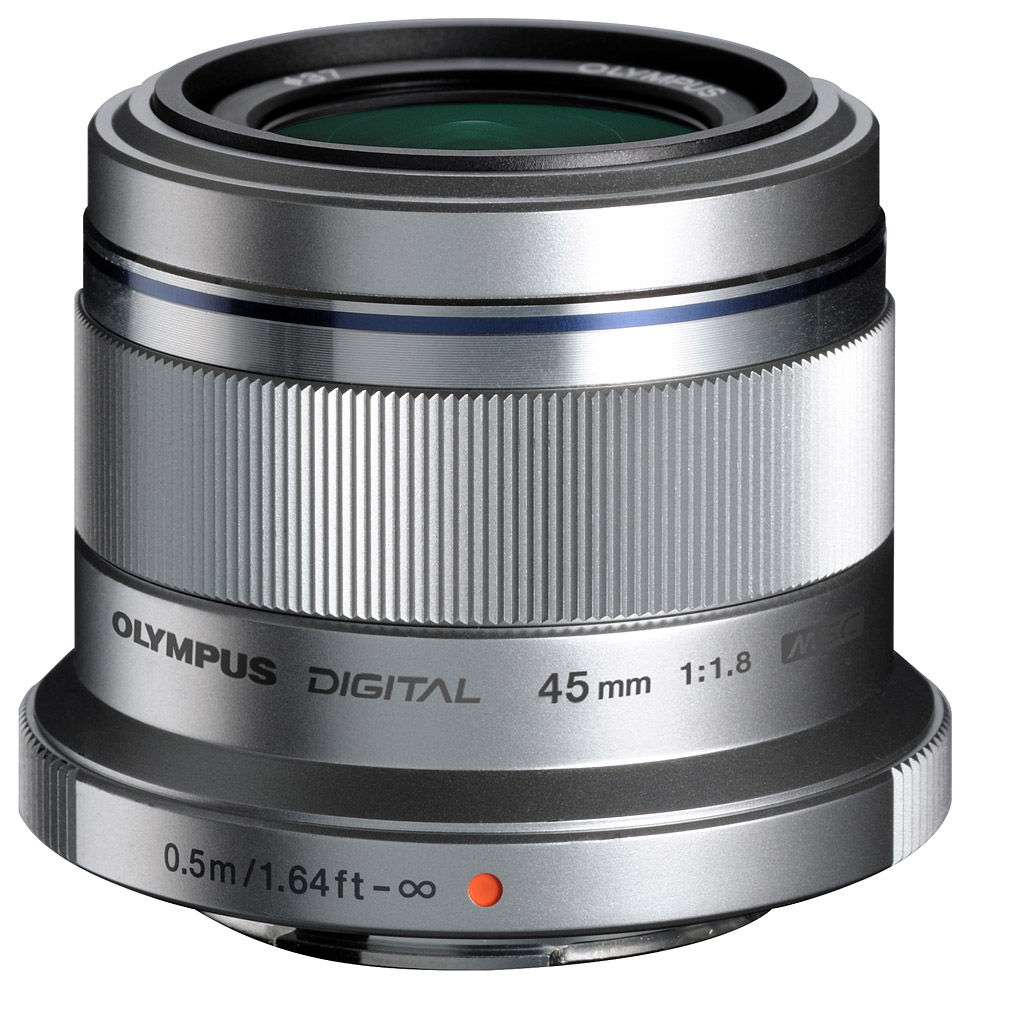
I notice that the Olympus E-M10 is currently only $499 (with kit lens) at Amazon US.
I think this is a fantastic deal. The E-M10 (review) is a slight simplification of the E-M5, which was the camera which brought the Micro Four Thirds camera system into the professional sphere. (I think the only significant differences is that the 10 is not weather sealed, and the Image Stabilization is slightly simpler.)
If you combine this for example with the outstanding, compact portrait- and all-round fast lens 45mm F:1.8, you will have a flexible and powerful system capable of professional results (sharp portraits with blurred backgrounds, and a general zoom) for under $1000. And it is even much lighter and more compact than DSLR cameras. And of course you have what is now one of the widest and best selection of lenses on the market, going from good, compact lenses, reasonably priced, to more expensive lenses which are amongst the best money can buy (no joking).
Whether you can afford them or not (apparently quite a few people can, Leica is busy), you may have an interest in reading about high-quality cameras. If so, this article is num-num. This is about the second version of the Leica M Monochrom, "typ 246". (It seems that Leica is following the trends of Apple and Amazon, no easy distinction of generations, an iMac is an iMac is an iMac, and Kindle is a Kindle is a Kindle. Sigh.)
A Black-and-white-only camera is not only interesting because of the purity and abstractness of the medium, but also because it has no color filter. This means that each pixel gets at least three times as much light as when a color filter is fitted (as it is in virtually all cameras). Imagine what this does for low-light power.
As as the camera does not have little filters in three different colors, this means that it does not have to guess what the light would be in pixel position x if the filter there had been green and not red. How much exactly this improves sharpness and tone accuracy, I don't know if anybody has tried to measure, but my guess is a doubling or so.
So I don't doubt this photographer when he says that the quality he is getting from this B/W full-frame camera with top lenses is "like from a field camera". (A field camera has a negative of 4x5 inches or even 8x10 inches. Not many of the general public are familiar with photographs of such technical quality.)
Of course like all high-end equipment, it does have lacks which laymen don't understand: it does not have Image Stabilization (anti-shake), and it does not have autofocus! A different beast.
New Leica Monochrom, "The Black Ghost"?
And being digital, it can be fitted with an Electronic ViewFinder (EVF), which does away with that old downside of non-reflex cameras, parallax (non-precise framing), and also now lets them use tele or zoom lenses, impossible with film Leicas.
(Gotta admit that as configured here, the machine is very handsome and "manly". :-)
Update: Mark reminds me about Visoflex, a flip-mirror adapter one could/can put between the Leica and special lenses, like specially made tele- or micro lenses. So "impossible" is not correct. Though surely it had some serious limitations, since Leica made the Leicaflex camera too.
Bert found this, and I agree with him, it could be very, very important indeed. Elon Musk intoduces new batteries which will pave the way globally for free solar power (after the initial investment, of course).
If we don't go this road, we will choke our planet and continue to have wars over oil, and we will be laughing stock for all the animals and all the other sentient races in the Galaxy.
Amazingly, the pre-order system is not USA-only, but for many countries. Unfortunately I live in an apartment where we are not allowed to put anything on the outside of the building, so I can't get solar panels. They say the battery can save you money anyway because energy providers charge different fees at different times of night and day, but I don't think that alone will be enough for me to do it. Otherwise I'd do this immediately. It would be so damn cool to live in a house independently powered by free solar energy.
I've rarely been very interested in very realistic paintings. And I think the main reason is that 98% of those exhibit very little imagination. The artist rarely puts very much of himself into them.
A lot of art is very very loud, but has little life in it. This is the opposite.
I also really like that this book has not only the paintings, but text also, which tells some kind of story together with the paintings. I have never understood why combining text and pictures is so rare, except in comix, which almost nobody considers Art.
Perhaps it is simply that painting and writing separately are very complex endeavors, hard to learn to do well and effectively. And so, making them work well together is like singing opera while racing a motorcycle.
And if you're not interested, just enjoy the beautiful presenter.
(Man, after seventeen years of running a girlie site it is hard to stop working at keeping up your reputation as a Dirty Old Man. :-)
It looks like a good product. Looks well produced, and it's amazingly small and light.
Downsides: does not work in landscape format. And will not work with certain cases (But this is true of virtually anything which connects to a phone).
(Hmm, kenu.com... either they got their mits on that back in the nineties, or they paid well for it. It's virtually impossible to find a pronounceable or even memorable domain of five or less characters now.)
What could be further apart than high math and The Simpsons? LOTS of things, as this article explains; there are several high-math big brains on the Simpsons writing team. (And more yet on the Futurama team.)
For example, "Colonel Homer" (1992) features the first appearance of the local movie theatre, and eagle-eyed viewers would have glimpsed that it is called the Springfield Googolplex. In order to appreciate this reference, it is necessary to go back to 1938, when the American mathematician Edward Kasner was in conversation with his nephew Milton Sirotta. Kasner casually mentioned that it would be useful to have a label to describe the number 10100 (or 10,000,000,000,000,000,000,000,000,000,000,000,000, 000,000,000,000, 000,000,000,000, 000,000,000,000,000,000,000,000,000,000,000,000,000). The nine-year-old Milton suggested the word googol. In his book Mathematics and the Imagination, Kasner recalled how the conversation with his nephew continued: "At the same time that he suggested 'googol', he gave a name for a still larger number: 'googolplex'. A googolplex is much larger than a googol, but is still finite, as the inventor of the name was quick to point out. It was first suggested that a googolplex should be 1, followed by writing zeros until you get tired." The uncle rightly felt that the googolplex would then be a somewhat arbitrary and subjective number, so he redefined the googolplex as 10googol. This represents a number that is 1 followed by a googol zeros, which is far more zeros that you could fit on a piece of paper the size of the observable universe, even if you used the smallest font imaginable.
I was astonished and disappointed when I could not find any translation of Gasolin's classic song. So I translated it myself. It's quite poetic in style, so the translation had to be quite conceptual at places. The text was written by Mogens Mogensen, an old poet the band had befriended. He wrote the lyrics to several of their songs, and was "a sailor like Captain Haddock". - Eolake
---
GASOLIN: TREMASTET BETON
Lyrics in Danish and English
Tremastet Beton
Du søger solnedgangens stille hygge,
der er myg
du drages mod havet der ser du mor'ild
gennem skovene's mørke sale
Three-masted Concrete You seek the quiet coziness of dusk mites in the air You are drawn towards the sea where you see phosphorescence through the dark cathedrals of the forests
over marker, marker med kornmodsglans
da søger du hjem i din stue
ensomheden, skæret, skæret fra de fyrre watt
du smider dig i dækstolen
dine øjne er lukkede, men du ser.
Over fields, fields with the glow of ripe harvest You seek your home and your room Loneliness, the glow, the glow of forty watts you throw yourself down on your deck chair Your eyes are closed. But you see.
Du ser drenge der søger mod havet
de kommer inde fra, langt inde fra landet
legende langs kajerne med store kraner
de kommer langvejs fra
havnepigernes fnisen på dækket
et stød i fløjten,
skrig
du skal hjem, åh hold kæft
You see boys seeking the sea They come from inland, far far inland they play along the habor with its great cranes They come from far away The girls of the habor giggling on the deck the whistle blows Screams You gotta go home now. Aw, shut up
hoppen skal, den skal den du vil
sømanden gør det sgu'
lukkede øjne, sømand fjorten somre.
Store have, ensomheden og drengen
solen, bølgerne, mågerne og stjernerne
krigen, pigerne og havnene, og myggene
og feberen, feberen og pigerne, piger i mange farver
The mare must, it must, what you know The sailor does it, I'll be damned Closed eyes. Sailor. Fourteen summers. Great seas, loneliness and the boy The sun, the waves, the gulls, the stars the war, the girls and the ports, and the mites The fever, the fever, the girls. Girls in many colors.
navne på havne, piger derfra er der ingen
sus-dus og rotter, delfiner og marsvin og lus
kanontorden, skibe der brænder, signalflag
havene ta'r dem, de sorte sejlere
lukkede øjne der stadigvæk ser
sømand, pensionist søger mage.
Names of ports, girls, none are from there The wild life and rats, dolphins and porpoises and lice. The thunder of cannons, burning ships, signal flags The seas take them away, those black sailors Closed eyes, but seeing still Sailor, retired, seeking soul mate
I'm sure some are not interested in this, but I find it much interesting. without engineering, we would still be in the dark ages, and I find it highly interesting to find out about all the ideas which make it work.