The most important aspect for art in connecting with an audience is expression. Not just what expression does it have, but perhaps even more importantly: how much.
This is not as obvious as it sounds. Many artists (in the widest possible sense) get so wrapped up in the technique, and in their own relationship with the work, that they forget about the audience. And as a consequence, many many works of art have barely any expression at all.
Sunday, November 24, 2013


Saturday, November 23, 2013
Friday, November 22, 2013

Thursday, November 21, 2013
NovemberLight2 (updated)
(23 Nov: I added three pics.)


Update:


Taken with iPhone 5s. With HDR, which fought a valiant fight against the surprisingly contrasty light this afternoon.
Apple is to be commended for not overdoing the HDR (contrast correction by combining several exposures) so as to get the unrealistic images where a sky is about as dark as a black cliff. No, it just corrects to get a bit more detail in the shadow and highlights, good.
This fantastic light, along with the dramatic clouds and the autumn colors, makes this quiet burg look grand. (Carefully choses viewpoints and compositions don't hurt, of course.)
Update:
JP said:
On a cloudy day, the building and gate in the first photo would be foreboding. Excellent detail, depth of field and composition.
On this lovely day, I did not see it as foreboding. But:

Tuesday, November 19, 2013
Makroscope
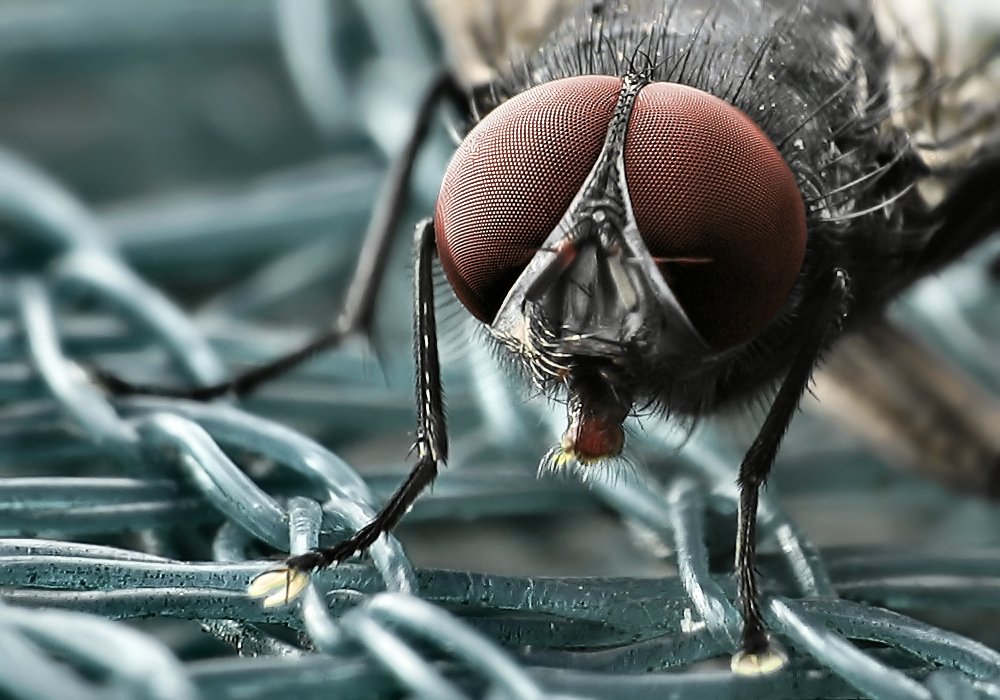
Another solution to macro: the Zoerk Makroscope Type 1.
 I've long wondered why we didn't hear of high quality close-up front lenses like this. (Basically just a loupe for the camera.) But of course for really high quality, you need aspherical lenses, which are expensive, but has become much less so in recent years, and this lens has two of them. And it will works with a lot of different lenses and cameras. (so long as the lens front is not too big.) The quality will remain at the quality your own lens has, this is a very good product. Of course, being that, it's not a cheapo thing either, around $400, plus a converter ring if your lens doesn't have to have a 52mm filter thread.
The photo below was taken by a simple Canon G3 "compact" camera, with the Makroscope. So it's also a road to makro without an exchangeable-lens camera.
(I hear it can also be combined with macro lenses to get even closer than one to one.)
I've long wondered why we didn't hear of high quality close-up front lenses like this. (Basically just a loupe for the camera.) But of course for really high quality, you need aspherical lenses, which are expensive, but has become much less so in recent years, and this lens has two of them. And it will works with a lot of different lenses and cameras. (so long as the lens front is not too big.) The quality will remain at the quality your own lens has, this is a very good product. Of course, being that, it's not a cheapo thing either, around $400, plus a converter ring if your lens doesn't have to have a 52mm filter thread.The photo below was taken by a simple Canon G3 "compact" camera, with the Makroscope. So it's also a road to makro without an exchangeable-lens camera.
(I hear it can also be combined with macro lenses to get even closer than one to one.)
Photo by Knut.
Has the self-driving car at last arrived?
 Has the self-driving car at last arrived?, article in TNY.
Levandowski says, our fear of driverless cars is increasingly irrational. “Once you make the car better than the driver, it’s almost irresponsible to have him there,” he says. “Every year that we delay this, more people die.”
-
Novemberlight

===
Olympus E-M1, 75mm 1.8 at F:1.8, 1/500 sec, ISO 200. HDR in-camera (which limits the ISO to 200, an oddity of the camera).
(Notice how pin-sharp it is, despite full aperture/opening. That lens is outstanding.)
Monday, November 18, 2013

Saturday, November 16, 2013
New Amazon mag: Day One
New Amazon mag: Day One
(It seems that so far, it's only available in the US. Typically, that is not made clear up front, making thousands of readers waste time trying to find it on their own non-US Amazon site. That is typical not just for Amazon, but for the majority of such instances, it's sad.)
The magazine is currently closed to unsolicited submissions (and I think it'll probably stay so). This is undoubtedly disappointing to millions of writers. But I can understand why. Even before Internet submissions, publishers were already drowning in unsolicited submissions. The so-called 'slush pile' was a never-ending backlog. And with the Net, Kindle, and Amazon, imagine the pile! They would probably get over a thousand stories per day, it would be insane.
And trying to judge the merit of one story can be hard enough, imagine trying to read slush 10 hours a day, it must fry your brain. I can't see how you could even enjoy reading anything for years after having had such a job for any real length of time.
(It seems that so far, it's only available in the US. Typically, that is not made clear up front, making thousands of readers waste time trying to find it on their own non-US Amazon site. That is typical not just for Amazon, but for the majority of such instances, it's sad.)
The magazine is currently closed to unsolicited submissions (and I think it'll probably stay so). This is undoubtedly disappointing to millions of writers. But I can understand why. Even before Internet submissions, publishers were already drowning in unsolicited submissions. The so-called 'slush pile' was a never-ending backlog. And with the Net, Kindle, and Amazon, imagine the pile! They would probably get over a thousand stories per day, it would be insane.
And trying to judge the merit of one story can be hard enough, imagine trying to read slush 10 hours a day, it must fry your brain. I can't see how you could even enjoy reading anything for years after having had such a job for any real length of time.
Reall far-out animals
Weeeird animals.
It's amazing that the life on Earth is so richly varied that there are still many creatures that most of us have never heard of.
12. The Peacock Mantis Shrimp: The mantis shrimp is also known as “sea locusts“, “prawn killers” and “thumb splitters”. Their front claws can deliver a punch that is as powerful as a gunshot. The mantis shrimp can’t be kept in normal aquariums, as they punch through other sea life and even the glass. (!)

13. The Venezuelan Poodle Moth: The Venezuelan Poodle Moth was only discovered in 2009. They are found in Venezuela and not much is known about these fuzzy, dog-like moths just yet.

19. The Thorny Dragon: The Thorny Dragon is an Australian lizard that resides mostly in the desert and, as the name suggests, looks like a tiny dragon. They are also known as the mountain devil, the thorny lizard, or the moloch. This lizard is covered in sharp spikes, and it uses these to frighten away predators. They can live up to 20 years, more than most lizards.

It's amazing that the life on Earth is so richly varied that there are still many creatures that most of us have never heard of.
12. The Peacock Mantis Shrimp: The mantis shrimp is also known as “sea locusts“, “prawn killers” and “thumb splitters”. Their front claws can deliver a punch that is as powerful as a gunshot. The mantis shrimp can’t be kept in normal aquariums, as they punch through other sea life and even the glass. (!)
13. The Venezuelan Poodle Moth: The Venezuelan Poodle Moth was only discovered in 2009. They are found in Venezuela and not much is known about these fuzzy, dog-like moths just yet.
19. The Thorny Dragon: The Thorny Dragon is an Australian lizard that resides mostly in the desert and, as the name suggests, looks like a tiny dragon. They are also known as the mountain devil, the thorny lizard, or the moloch. This lizard is covered in sharp spikes, and it uses these to frighten away predators. They can live up to 20 years, more than most lizards.
Autumn image
My penpal Mark Weise sent me this. I think it's nice and unusual, at first glimpse out of the corner of my eye, I thought it was a painting.
Mark made the dark version, based on how it looked.
I then adjusted to the lighter version, partly on habit, partly thinking of making it look good on the maximum number of monitors. (For example I have my monitor adjusted a bit darker these days, to save wear on the eyes.) But I admit it looses a little of the artistic specialness that way.


To illustrate, I also include one where I adjusted all the way. But while it is has more spark, I think this makes the picture too normal, lose the specialness.
It's hard to say, but I guess if looked upon as art, it all comes down to taste.

Mark made the dark version, based on how it looked.
I then adjusted to the lighter version, partly on habit, partly thinking of making it look good on the maximum number of monitors. (For example I have my monitor adjusted a bit darker these days, to save wear on the eyes.) But I admit it looses a little of the artistic specialness that way.


To illustrate, I also include one where I adjusted all the way. But while it is has more spark, I think this makes the picture too normal, lose the specialness.
It's hard to say, but I guess if looked upon as art, it all comes down to taste.

Tuesday, November 12, 2013
Is perfection valuable?
Aim at perfection in everything, though in most things it is unattainable. However, they who aim at it, and persevere, will come much nearer to it than those whose laziness and despondency make them give it up as unattainable.
- Lord Chesterfield
No good work whatever can be perfect, and the demand for perfection is always a sign of a misunderstanding of the ends of art.
- John Ruskin
I really like the second one. That's quite important, because a lot of artists, as they learn their craft, get hung up on Perfection, and it's a very sticky trap.
Subscribe to:
Posts (Atom)