Thursday, June 21, 2012

Gigapixel camera (updated)

Gigapixel camera. Up to fifty GP, actually. 50,000 megapixels.
It combines many small cameras, and is about the size of a PC.
You can read the article, but basically it states the amazing facts that the camera is Very Sharp, and that it will get Smaller In The Future.


Update:
A. tipped us off for much more detailed info.


(Not a hugely informative video, admittedly.)

Little Lennon (updated)

I'll bet his teachers were very gracious about being told that from a Liverpool working-class 7-year-old.


A said:

I don't believe that he actually said that anyway.
It's not a very good approach to life. In my grandparents' time, which is the generation that endured the Great Depression and WW2, there was the emphasis on what you had to do in life - getting a job, etc., etc. If you could be happy too, great - but it wasn't the focus. This focus on personal happiness as the ultimate goal in life is what's produced today's spoiled, self-centered bratty kids.

A2 said...
Our parents generation was never interested in keeping up standards. They wanted to be happy, but the last way to be happy is to make it your objective in life.

Those are very fair points.
How do you become Happy? The search for happiness will usually lead you to search outside yourself, where you won't find it.

On the other hand, the idea that "all that matters is that you're happy" may help to defuse a lot of false goals in life.
For example, somebody living a life on small means but doing something they really care about may be happy, but their parents may see it as terrible situation not to have Status and Security, and pressure them to become a doctor or lawyer. (Bruce Springsteen tells that his parents were still pressuring him to go to college well after he was a multi-millionaire.)

Wednesday, June 20, 2012

Overcome Your Fear of Shooting Street Photography

[Thanks to Imaging Resource]
Overcome Your Fear of Shooting Street Photography, free ebook.

I think that dealing successfully with strangers, whether in photographing them or in other contexts, a very important ingredient, well two really, is 1) knowing that you are doing nothing wrong, and showing it in your body language. 2) Being open and friendly. This of course ties in with the first one. People who have a bad conscience about what they are doing are usually acting defensively or antagonistically. If you are open and friendly, people will come into your space without automatic suspicion.

Also, be chatty. Start talking about some aspect about the subject or photos, or your camera. People probably won't be interested, but actually the more geeky your chat is, the better, people will get bored and will conclude that you are a harmless eccentric.

Monday, June 18, 2012

New ground in mobile photo apps

Bert found these very cool photo apps (see the videos). It seems they are not for sale right now, but should be soon. One use for example is a time picture of a person in a busy street. And after taking the picture you, right on the phone, freeze the person, and just click on each to remove the other people, because the phone camera captured the background behind each over the couple seconds you "filmed", and it blends a bunch of photos into one.

I still think Apple should have called it something else than iPhone, and thus laying the ground for people seeing "smartphones" as phones. They really have little to do with a phone, the phone app is just one amongst many, and not even the best one. It's a 21st century palm computer, and way more powerful than anybody imagined in the nineties.

Sunday, June 17, 2012

Duskiness


(All are clickable. The middle one especially shows much better large.)

Olympus OM-D EM-5, Olympus 45mm 1.8 at full opening. About 400 ISO.

Photos with "bokeh", or soft background blur can't generally be produced with pocket cameras, one of the few downsides to them still*. The bigger the sensor, the easier you can get nice soft background blur. The new mirrorless cameras, like Micro Four Thirds for example, have smaller sensors than traditional film (half the size of a 35mm film frame ("full frame"), linearly, one quarter area-wise), but with the right lens you can still get this effect.


*Even here, progress is made. The Sony RX100 is pocket-sized but still manages to have a sensor large enough to get some background blur if you want.

Saturday, June 16, 2012

Save the Troy Library "Adventures In Reverse Psychology"

[Thanks to Bert]


The city of Troy, Michigan was facing a budget shortfall, and was considering closing the Troy Public Library for lack of funds. Even though the necessary revenues could be raised through a miniscule tax increase, powerful anti-tax groups in the area were organized against it. A vote was scheduled amongst the city's residents, to shut the library or accept the tax increase, and Leo Burnett Detroit decided to support the library by creating a reverse psychology campaign. Yard signs began appearing that read: "Vote to Close Troy Library on August 2nd - Book Burning Party on August 5th." No one wants to be a part of a town that burns books, and the outraged citizens of Troy pushed back against the "idiotic book burners" and ultimately supported the tax increase, thus ensuring the library's survival.

Bril. 

Mac OS 7.5.3 desktop patterns

I started with Mac OS 7.5, and suddenly I got nostalgic for those old destop patterns, from before the system itself supported large wallpaper images (though you could use a plugin called Decor. Decor was more intelligent than OS X is still, it had more options, including hiding none of the image under the menu bar, which OS X still can't do!)

I had to look around a bit, but a genius named Mike R extracted them and posted them  (small zip file). (Backup link.)


Funny enough, admittedly, on a modern high-res screen with its powerful color rendition, many of these patterns, even the more subtle ones, are sort of loud and dizzying.
One reason they lack subtlety is that they were designed to work on screens which could only show 256 colors.


A lovely gal named Dung

Just got this in the email:


Hello, darling! How are u? What's up?
I am Dung.
So, I have not got any idea from what to start. Maybe from this...
One of my friends showed me your pictures and I liked them so much! 
I am searching for interesting, sedate fellow for for a very long time but there are so many assholes who're just banging and then staying me alone. 
I hope that you are one of them! 
So, if u're a nice fellow then I am waiting for ur mail.

If the "u're" and such did not convince me that she's a catch, the name did it!

And I was very pleased to be called an "interesting, sedate fellow".

Friday, June 15, 2012

Victor Borge - 80th birthday, Michala Petri

My mother used to complain that VB never finished his music pieces. A fair complaint, he was very funny, but also a bril pianist. 
He was Danish, for those who don't know. There are subtitles on the video. If they don't show, try the CC button on lower right.


He addresses Michala by the formal form of "you" in Danish, something which is quite unusual in modern times. But he seems to like her. I don't blame him, what a luvverly woman.

His Danish is nigh perfect, even after having lived in the US for over fifty years.

Wednesday, June 13, 2012

Carved Book Landscapes by Guy Laramee

Carved Book Landscapes by Guy Laramee, post.

In the ebook age, paper books are more and more becoming aesthetic objects rather than carriers of information.


Those Olympus accessories

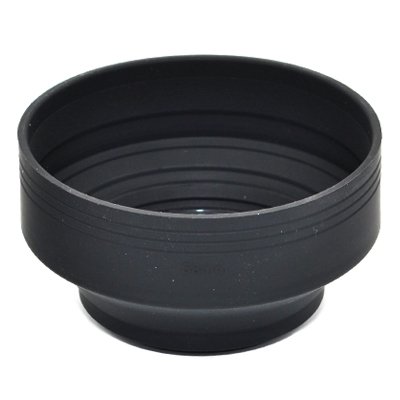
You know something is a luxury/high-end item, when a lens hood costs $100, and a lens cap $50!
OK, a plastic lens cap is apparently included, but the lens is not exactly cheap (approaching one grand), one would think they might include the nice metal cap?


Update:
Mark said:

In the 1970s I used and loved an Olympus 35RC. The standard hood was effective but costly; it didn't come with the camera. My sister, who happened to be living in Tokyo, bought me a couple of replacements at a SUBSTANTIALLY reduced cost (compared to US/Canada pricing). Lens caps of the simple spring-loaded after-market variety did the job better than the original which relied on a felt-trimmed friction fit.


Later, flexible rubber aftermarket screw-on lens hoods did better duty than the available but costly hoods from Asahi for my Pentax Super Program and various lenses. The caps were never very effective.

Oh! On my first camera (well, first serious camera), Konica TC, I had a wonderful hood of rubber, which folded back over the lens when you packed in the camera. My problem with hoods is that they increase bulk so much, and makes the camera much more visible when shooting candidly.

... Ah, I see one can still get the rubber hoods (not the S/M kind), I'll look at that.